
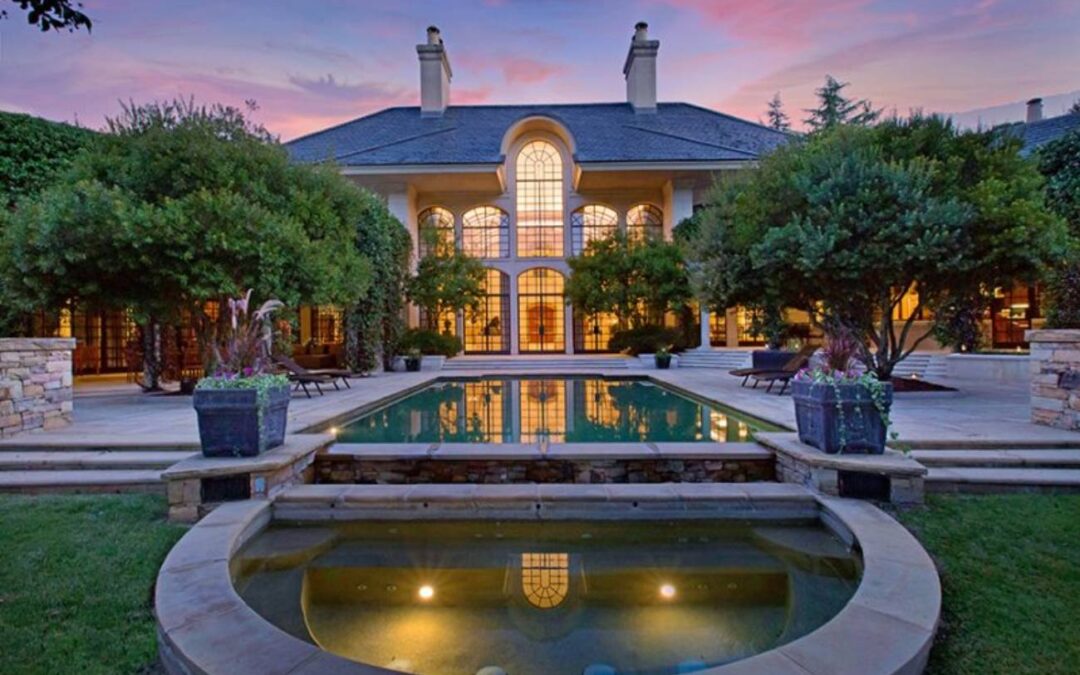
Luxury real estate auctions have become a powerful way for high‑end sellers to find real, data‑backed market value—often faster and with more certainty than traditional listings. From oceanfront estates and penthouse “trophy homes” to Bluegrass horse farms, these events show how competitive bidding can uncover what qualified buyers are genuinely willing to pay.
Landmark luxury real estate auction sales
Around the world, luxury real estate auctions have produced some of the most talked‑about residential sales in history.
- “The One,” Bel Air, California – about $141M
In 2022, Sotheby’s Concierge Auctions sold “The One,” a 100,000‑plus‑square‑foot mega‑mansion in Bel Air, for roughly $141 million, the highest price ever achieved for a residence at auction and one of the top public residential sales that year. This world‑record auction underscored how the right platform and marketing can place even ultra‑unique properties in front of the global ultra‑high‑net‑worth audience they require. - Casa En Maui, Keawakapu Beach, Hawaii – $28.56M
Casa En Maui, a rare beachfront estate on Keawakapu Beach, was offered directly at auction rather than through a traditional listing. In 2025, the property sold for about $28.56M, becoming Maui’s highest residential sale that year and closing in roughly 60 days in a market where luxury listings had averaged nearly a year on market. - Oceanfront and mountain estates in the $3M–$8M range
Firms such as Platinum Luxury Auctions and other specialty houses have repeatedly acquired properties that struggled to sell through traditional listings—such as a Kailua‑Kona oceanfront estate initially listed at $4.35M or a Sevierville, Tennessee, mountain retreat once asking $5.2M—and sold them through targeted luxury real estate auctions after attracting global attention. These campaigns demonstrate that the model works not just at $100M+, but reliably in the $3M–$8M band many high‑end sellers occupy.
Kentucky horse farms and equestrian estates
Luxury real estate auctions are a natural fit for equestrian properties and Bluegrass farms, where value is tied not just to the residence but also to acreage, soils, barns, and proximity to racing venues.
- Johnny Depp’s “Betty Sue’s Family Farm,” Lexington, Kentucky
Actor Johnny Depp’s 41‑acre horse farm near Keeneland Race Course—featuring a 6,000‑square‑foot main home, multiple barns, paddocks, and a guest house—was listed at around $2.9M and later taken to auction in 2017 when it did not sell conventionally. Bidding reportedly reached about $1.4M at the auction, which the seller declined. Still, the event drew national attention to an otherwise niche luxury farm listing. It demonstrated how auctions can quickly establish the buyer pool’s willingness to pay for a Kentucky horse property at a given moment.
Beyond celebrity examples, Kentucky markets such as Versailles, Shelby County, and the greater Lexington area routinely see multimillion-dollar equestrian estates marketed or repositioned through auctions or auction-style campaigns, precisely because they are difficult to price using standard residential comparables.
Perceived value vs. real market price
Luxury sellers often start with a number based on what they have invested, what neighbors achieved in a different cycle, or what a property “should” be worth emotionally. Buyers, however, are anchored to financing conditions, global alternatives, and their own risk tolerance, which is why seller “value” and buyer “price” frequently diverge.
Luxury real estate auctions help close this gap:
- Faster price discovery
Instead of months or years of quiet resistance to an asking price, auctions compress attention into a defined marketing period and bidding date. Within a single campaign, sellers see where bidding actually tops out—whether that is $141M for a Bel Air mega‑mansion or a mid‑seven‑figure number for a mountain retreat—providing a market‑backed answer on value. - Buyers bid more willingly than they “lowball.”
In traditional listings, many luxury buyers avoid submitting offers far below the list price for fear of appearing unreasonable, especially in prestige communities. In a luxury real estate auction, those same buyers are comfortable starting low and bidding incrementally, because the format is built around transparent competition rather than private negotiation. This dynamic can reveal a price point that would never appear as a single written offer. - Premiums and reduced carrying costs
Even when a sale closes below the original list price, auction contracts often include a buyer’s premium in addition to the high bid, and the overall timeline is substantially shorter. For high‑end, non‑primary residences that are not generating income—beach houses, ranches, and horse farms—cutting 6–12 months off days‑on‑market can save substantial money in taxes, insurance, utilities, security, and maintenance, which meaningfully improves the seller’s net outcome.
Why do luxury sellers and agents choose an auction?
For owners of luxury homes, Kentucky horse farms, estates, and high‑end second homes in the $1M–$5M+ range, luxury real estate auctions are now a strategic option rather than a last resort.
- Time‑certain outcomes
Marketing windows, auction dates, and closing timelines are defined in advance, which is crucial for sellers tied to business exits, relocations, or estate planning. - Global, curated exposure
Auction platforms maintain databases of high‑net‑worth and ultra‑high‑net‑worth buyers and work closely with luxury brokerages, ensuring properties are exposed well beyond a single local MLS footprint—key for lifestyle assets such as Maui beachfront or Bluegrass equestrian estates. - Net‑of‑cost efficiency
When factoring in buyer’s premiums, reduced carrying costs, and the opportunity cost of capital tied up in a non‑performing asset, many sellers find that a well‑run auction produces a net result equal to or better than waiting for a hypothetical full‑price offer that may never materialize.
Is a luxury real estate auction right for your property?
If you own a distinctive home in Louisville, a Kentucky horse farm, a regional estate, or a high‑end second home, luxury real estate auctions may be the most efficient way to align perceived value with real‑world buyer demand while controlling time and carrying‑cost risk. The right auction strategy can compress your timeline, expand your buyer pool, and reveal the actual market price of your property—without letting another year slip by on the market.
To explore whether an auction is appropriate for your asset, reach out to schedule a confidential call to discuss how a tailored luxury real estate auction strategy could work for your situation.
Read more about luxury real estate auctions.